
Sponge City Macao: Harnessing Nature for Urban Water Solutions
TEAM
Karen Araño Tagulao || PI, ISE/USJ
Andre Antunes || Member, ISE/USJ
Alexandre Lebel || Member ISE/USJ
Cristina Calheiros || CIIMAR, University of Porto
Nian She || Tsinghua Innovation Centre in Zhuhai
Rapid urbanization and climate change pose significant challenges to urban water
management, exacerbating flood risks, water pollution, and ecological degradation.
Traditional grey infrastructure solutions, while widely implemented, often fail to address the root causes of these issues and lack long-term sustainability.
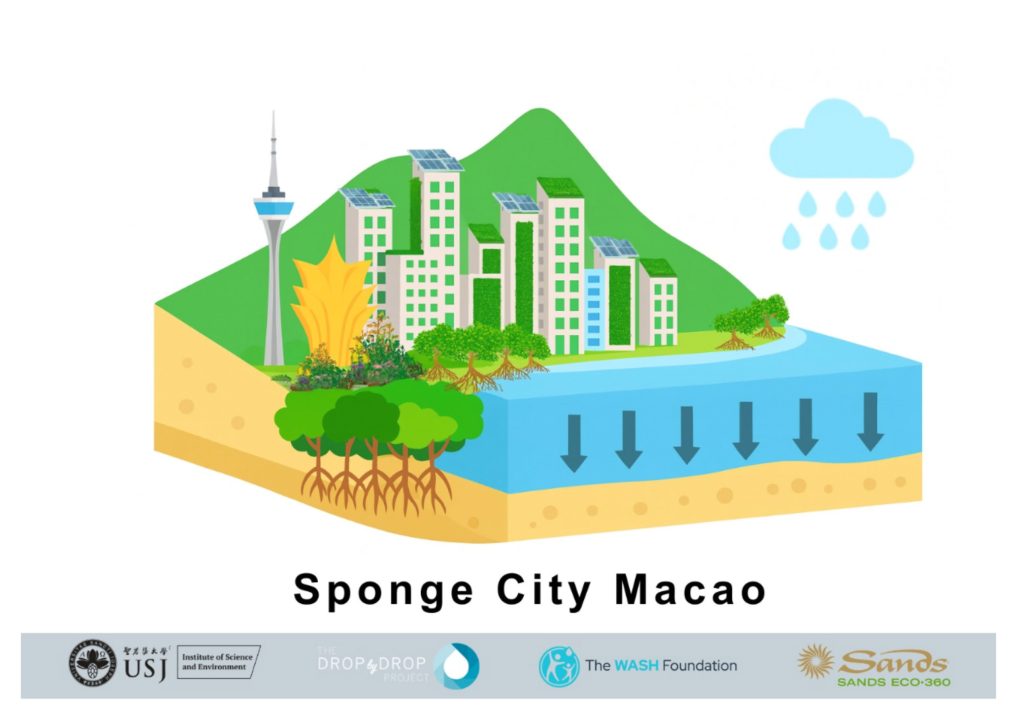
Nature-Based Solutions (NBS) have emerged as a promising alternative, integrating ecological and engineered systems to enhance urban resilience. The Sponge City Concept (SCC), a key NbS strategy, improves urban water retention, infiltration, and purification by mimicking natural hydrological cycles.
Combined with low-impact development (LID) techniques such as green roofs, permeable pavements, and bioswales, SCC mitigates urban flooding and enhances water quality. Macao SAR, a highly urbanised and flood-prone region, faces compounded challenges due to climate change and geographic vulnerabilities.
This study explores the integration of NbS and SCC to develop a sustainable urban water management framework for Macao. Key objectives include assessing the effectiveness of NbS and LID interventions, evaluating the role of mangroves in flood mitigation and water quality and analysing microbial biodiversity in NbS systems.
Findings from this research aim to inform policy recommendations, advance science and technology, and contribute to Macao’s transition towards a climate-resilient urban landscape.
The project includes the following tasks:
TASK 1
Nature-Based Solutions-Sponge City Concept for Urban Flooding and Water Management in Macao
Objective: To assess the effectiveness of Nature-Based Solutions (NbS) and Sponge City strategies in mitigating urban flooding and improving water quality in Macao.
TASK 2
Mangroves as Nature-Based Solutions for Water Quality and Flood Mitigation
Objective: To evaluate the role of coastal and freshwater mangroves in flood mitigation and water purification.
TASK 3
Biodiversity and Microbial Analysis Across Systems
Objective: To analyze microbial biodiversity across various NbS interventions and identify key microorganisms involved in pollutant degradation and nutrient cycling.
TASK 4
Promoting the Sponge City Concept through Community Engagement
Activities